Ribs are one of the most useful ways to increase stiffness without turning a plastic part into a thick, slow-cooling solid.
What ribs do
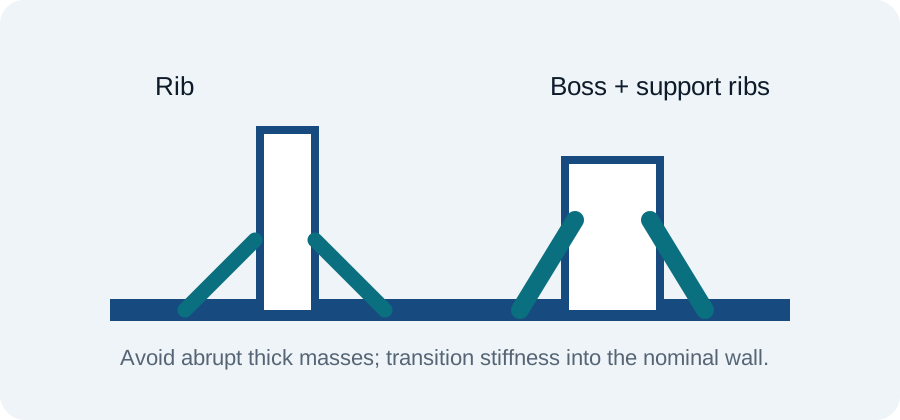
A rib increases the second moment of area of a section, so a relatively small amount of material can make a wall much harder to bend. Ribs can also support bosses, guide assembly features and stabilize large flat surfaces.
Thickness relative to the nominal wall
A common DFM starting point is to keep rib thickness below the adjoining nominal wall thickness—often around 40–60% for unfilled materials when appearance matters. The exact value depends on resin, surface finish and part geometry. The reason is thermal: an overly thick rib root behaves like a local thick section and can pull a visible sink mark into the opposite face.
Height, spacing and buckling
Very tall thin ribs can become difficult to fill, vent and eject. Rather than making one extremely tall rib, several moderate ribs or a different section geometry may be more robust. Spacing also matters because closely packed ribs create heat concentration and tooling that is difficult to cool.
Draft and root radius
Rib side walls normally need draft in the tooling pull direction. Add a root radius rather than meeting the parent wall with a sharp inside corner; this improves stress flow and is friendlier to machining and molding.
Ribs near cosmetic surfaces
If the opposite face is Class-A or otherwise visible, treat rib intersections as a cosmetic DFM issue, not only a structural issue. Material choice, color, gloss, gate location and process settings all influence whether sink or read-through becomes visible.
Review in context
Check rib geometry together with wall thickness, boss design, draft and ejector strategy. A rib that is structurally sensible can still be hard to tool if it creates a deep narrow steel feature with poor cooling or venting.
Injection-molding verification
Confirm resin-grade data, mold construction, texture/draft requirements, shrinkage assumptions and the selected molder's capability.