A shaft can be strong enough in shear and still be too flexible in twist. Good shaft sizing therefore checks both stress and torsional stiffness.
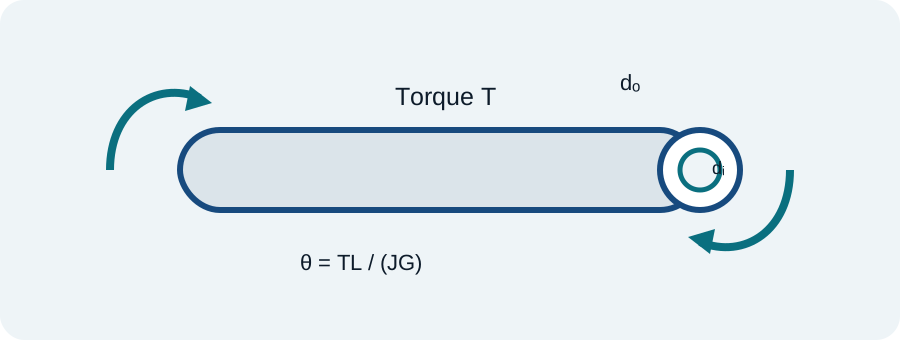
Polar moment controls torsional geometry
For a solid circular shaft, J = πd⁴/32. For a tube, subtract the inner-diameter term. Because diameter appears to the fourth power, modest diameter changes can strongly affect torsional stiffness and stress.
Maximum shear occurs at the outside surface
Under ideal Saint-Venant torsion, τ = Tr/J. The outer radius has the highest nominal shear stress. This is why grooves, keyways, cross-holes and shoulders at the surface can be especially important fatigue details.
Angle of twist is a separate design check
Elastic twist is θ = TL/(JG). Long shafts can accumulate meaningful angular deflection even when their nominal shear stress is comfortable.
Hollow shafts use material efficiently
Material near the center contributes relatively little to J compared with material near the outside diameter. A tube can therefore provide a favorable stiffness-to-mass ratio, provided local buckling, manufacturing and connection requirements remain acceptable.
Real shafts need more than torsion
Rotating shafts often carry bending, axial load, stress concentrations and fluctuating torque simultaneously. Bearings, shoulders, keyways, splines and press fits can govern fatigue life rather than the uniform-shaft nominal stress.
Machine-design verification
Check the full load spectrum, fatigue, lubrication, material data, environment, manufacturing variation and the relevant machine-element standard before release.